



PPE Inspection Checklist: Key Takeaways
- Personal protective equipment (PPE) inspection checklists help frontline teams identify damaged equipment before it leads to injuries, accidents and downtime
- Supervisor PPE inspection checklists improve documentation organization and help keep job sites compliant
- Identifying common PPE defects early prevents equipment failure and protect your teams
One in 10 workers say they feel unsafe on the job.
That’s not just a statistic. It means someone on your crew may be heading into a shift unsure whether the site is truly under control.
Here’s what you will find if you continue reading:
- When PPE inspections are required
- A practical PPE inspection checklist for teams
- A structured audit checklist for supervisors
- Common PPE defects to watch for
Need an efficient PPE inspection checklist?
doForms can help
When PPE Inspections Are Required
The U.S. Occupational Safety and Health Administration (OSHA) requires PPE inspections as part of its standards.
These requirements are outlined in 29 CFR 1926 for the construction industry and 1910 Subpart I for general industry PPE regulations.
Construction companies must ensure PPE is:
- Available wherever hazards are present
- Maintained in usable condition
- Inspected on a routine basis
- Taken out of service once defects are identified
If you’re in the construction sector, you must ensure PPE is inspected:
- Before each shift
- After any incident or impact, for example, after a fall arrest event
- On a scheduled weekly or monthly basis
- After exposure to extreme conditions like chemicals, heat or excessive moisture
Imagine one of your workers dropped a hard hat from scaffolding three stories high. It must be inspected immediately because even if there are no visible cracks, the impact could have caused structural damage compromising your worker’s protection.
Staying consistent with inspections and documenting them properly with PPE inspection checklists doesn’t help just during audits. It also reduces exposure to penalties and reinforces the expectation that you take safety seriously on your sites.
Construction PPE Inspection Checklist For Teams
Daily PPE inspection checklists protect your frontline workers, ensuring they use only equipment that’s safe.
Hard Hats
Hard hats don’t always show obvious damage. A small crack or weakened suspension can dramatically reduce protection during impact.
- Look closely at the shell for cracks or dents.
- Examine the suspension for fraying, stretching or loose attachments.
- Confirm the fit is snug but comfortable, with no excessive movement.
- Review the manufacture date and replace according to the manufacturer’s stated lifespan.
On busy sites, damaged PPE often gets overlooked simply because no one slows down long enough to look closely.
Safety Glasses & Face Shields
Scratched eyewear reduces visibility and increases the risk of accidents.
- Check for scratches that obstruct vision.
- Inspect lenses for cracks.
- Ensure side shields are secure.
- Confirm proper fit.
High-Visibility Clothing
If reflective strips are peeling or the fabric has faded, that vest may no longer do its job, especially around moving equipment.
This can be critical if your teams work in low-light conditions: think early or late shifts, foggy weather, underground or tunnel projects, parking garages, basements or areas shadowed by large structures.
- Inspect for tears or excessive wear.
- Ensure reflective strips remain visible.
- Confirm garments are clean and not faded.
Gloves
Worn or damaged gloves compromise hand protection and increase the risk of cuts, burns and chemical exposure.
- Confirm workers are wearing the glove type appropriate for the task.
- Look for punctures, thinning material or small tears.
- With chemical-resistant gloves, check for stiffness, swelling or discoloration after use.
Fall Protection Equipment
Fall protection gear deserves extra scrutiny. Even minor wear in webbing or hardware can compromise its performance when it matters most.
- Inspect harness webbing for cuts or burns.
- Check D-rings for cracks or corrosion.
- Verify stitching is intact.
- Ensure connectors and lanyards lock properly.
- Immediately remove any harness involved in a fall arrest.
Respiratory Protection
Respirators are effective only if they seal and filter properly. Worn straps and expired cartridges quietly undermine that protection, causing immediate breathing distress and long-term lung damage.
- Inspect facepiece for cracks or distortion.
- Check straps for elasticity.
- Confirm filters are current and not expired.
- Ensure proper seal.
Frontline crews handle daily checks, but accountability ultimately rests with supervisors.
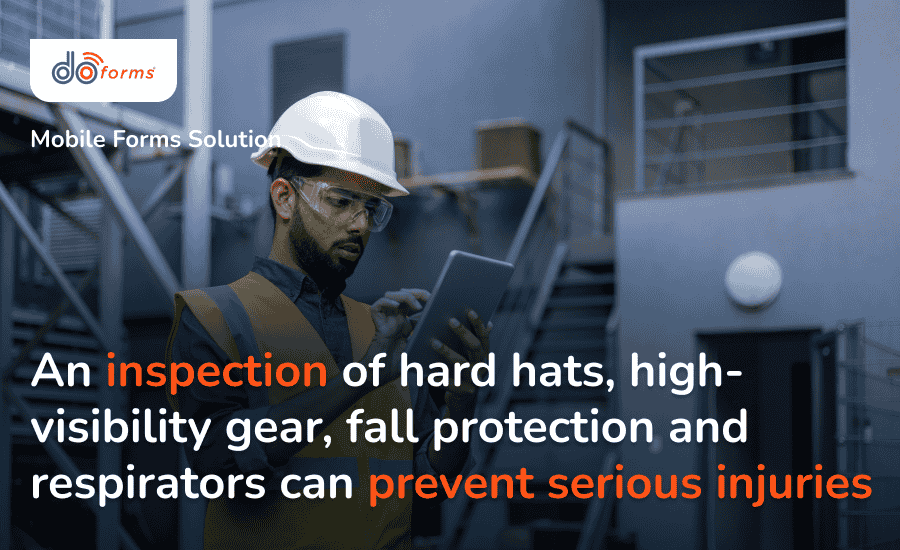
Thorough daily checks protect your workers on the construction site
PPE Inspection Checklist Template For Supervisors
Daily checks matter, but supervisors carry a broader responsibility. Their role isn’t just to glance at equipment. It’s to make sure inspection systems are actually working.
Documentation & Compliance
Incomplete or inconsistent inspection records increase the risk of OSHA fines and liability exposure.
- Maintain inspection logs.
- Record serial numbers when applicable.
- Track replacement schedules.
- Verify PPE training documentation.
Training Verification
If your workers are not trained or are trained insufficiently, they are more likely to misuse PPE inspection checklists, increasing injury rates and compliance violations.
- Confirm employees understand inspection procedures.
- Ensure you have the right PPE selection for your site’s task hazards.
- Align training with OSHA standards and hazard assessments.
Storage & Maintenance
Not storing PPE properly speeds up equipment degradation and shortens its protective lifespan.
- Verify PPE storage areas are dry and clean.
- Ensure fall protection gear is stored away from UV exposure.
- Confirm chemical PPE is separated properly.
Hazard-Specific Audits
PPE inspection checklists should reflect the specific risks on your site. A high-rise build doesn’t carry the same risks as a concrete cutting project, and your review process should reflect that.
- Fall Hazard Areas
- Inspect harness webbing and stitching for cuts, burns or UV damage.
- Test lanyards and self-retracting lifelines to ensure locking mechanisms work properly.
- Verify anchor points are secure and don’t have structural damage.
- Confined Spaces
- Confirm respirators and atmospheric monitoring devices are functioning the way they should.
- Inspect retrieval systems and lifelines for wear or damage.
- Verify communication devices are working.
- Electrical Zones
- Check insulated gloves for punctures
- Verify testing dates are current.
- Confirm face shields and voltage-rated tools are free from cracks or defects.
- Heavy Equipment Operations
- Ensure high-visibility clothes are clean and reflective material is intact.
- Inspect hard hats for damage or degradation.
- Verify steel-toe boots have intact toe protection and slip-resistant soles.
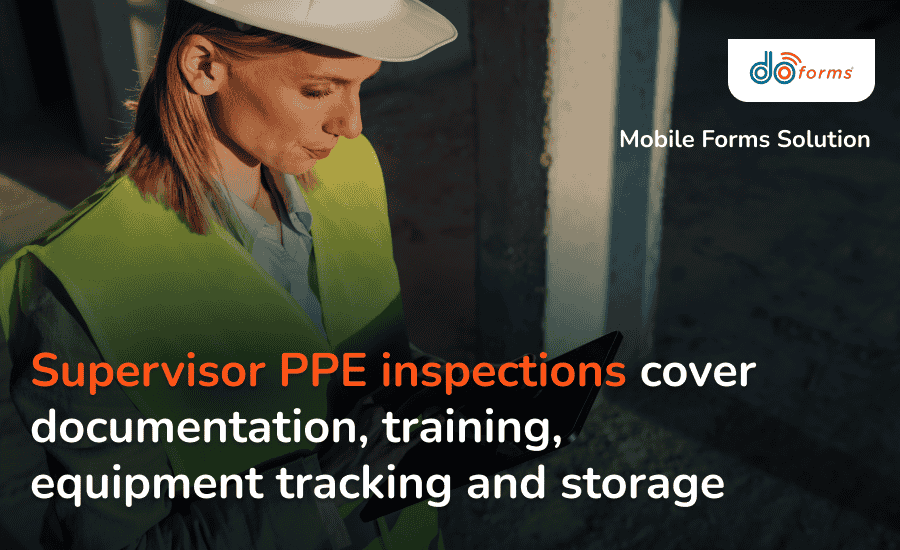
A clear supervisor checklist helps keep teams accountable and sites compliant
Common PPE Defects & Wear Issues
Are your workers exposed to weather changes, chemicals and physical stress on the construction site?
These demanding conditions accelerate PPE wear and increase the likelihood of equipment damage.
Inspections are vital because they can identify issues, so you remove compromised equipment before it fails to offer protection.
The most common issues with hard hats include cracks, brittleness and UV degradation from prolonged sun exposure. Suspension systems may also loosen or fray, making the hat ineffective.
Fall protection equipment requires close attention. Harness webbing can fray or burn from welding sparks; stitching may begin to pull apart, and D-rings and connectors can corrode or become distorted, putting workers at risk.
General–purpose gloves may thin out and puncture when used often, while chemical-resistant gloves can stiffen or swell after exposure. The result? Compromised hand protection.
Respirators and facepieces also show wear over time. Warped seals, cracked valves, and expired cartridges can facilitate inhaling airborne contaminants that lead to serious respiratory conditions.
Even minor defects can compromise compliance and worker safety. A consistent PPE inspection checklist will prevent costly downtime and strengthen your risk management strategy.
Streamline PPE Inspections With doForms
Are your workers losing paper PPE inspection checklists in trucks or site trailers? Are you overwhelmed by unclear handwriting when you need documentation for an OSHA audit?
Paper checklists slow down your operations, increase the risk of errors and make you liable to fines and personal injury lawsuits.
Wondering about the difference between paper and digital forms?
As a trusted mobile forms solution, doForms can be used to create multiple forms, including PPE inspection checklists.
Mobile forms allow your workers to fill out complete checklists on their smartphones or tablets before every shift, completing mandatory fields and attaching photos to document damage instantly.
With doForms, supervisors can see inspection status across job sites in real time, receive alerts when equipment is flagged and maintain organized digital records ready for review.
Reduce administrative work and strengthen compliance.
Try doForms For Free!
PPE Inspection Checklist: FAQs
Can digital PPE checklists improve compliance?
In many cases, yes. Digital checklists eliminate common issues like incomplete fields, illegible handwriting and lost paperwork. They also allow photo documentation and automated alerts, which can simplify regulatory reviews.
How can digital PPE inspection checklists help supervisors across multiple job sites?
Paper PPE inspection checklists make supervision across multiple sites difficult and slow. doForms provides real-time visibility into PPE inspections, defective equipment and compliance status across all active projects.
Is it difficult to switch from a paper PPE inspection checklist to a digital one?
No. doForms has an intuitive and user-friendly interface that for both field workers and supervisors. Teams can complete inspections on mobile devices just like paper forms, but faster and more accurately.
Ready to try a digital PPE inspection checklist?
Book A Demo