



Equipment Maintenance Log: Key Takeaways
- Equipment maintenance logs track inspections, repairs and servicing, so your assets provide reliable performance
- Equipment maintenance log helps identify issues early, which results in less downtime and reduced repair costs
- Standardized templates ensure consistent data collection and make logs easier to review and analyze
- Digital maintenance logs allow real-time updates, faster reporting and centralized access to accurate data
- Mobile forms streamline maintenance workflows by reducing manual work and eliminating delays
- Integrating maintenance logs with other systems improves your business’ efficiency
Unplanned downtime costs the world’s 500 largest companies 11% of their revenue, which adds up to a staggering $1.4 trillion loss, according to the latest Siemens predictive maintenance report, The True Cost of Downtime 2024.
And in many cases, the cause is simple: poor or inconsistent maintenance tracking.
Most breakdowns don’t happen suddenly; they build up. A good maintenance log helps you catch early warning signs.
Let’s break down:
- The importance of equipment maintenance logs
- The key elements every equipment maintenance log should include
- How to use an equipment maintenance log effectively
- The differences between paper and digital maintenance logs
- Common mistakes to avoid when managing maintenance records
Dealing with incomplete or inaccurate maintenance records?
Improve your process with doForms
Why Equipment Maintenance Logs Are Important
Think of them as a timeline of everything that’s happened to a piece of equipment: inspections, repairs, servicing schedules and performance history.
Reduce Downtime & Repair Costs
Without a proper logging system, teams can fix problems only after failures occur, which leads to downtime, higher repair costs and lost productivity.
Instead of reacting to breakdowns, you start spotting patterns early, which makes it easier to address issues early.
Improve Visibility & Transparency
When logs are kept properly, it’s easy to verify:
- What maintenance was performed
- When it was completed
- Who performed the task
- What issues were identified
This level of visibility reduces miscommunication and ensures accountability across teams.
Enhance Compliance
Many industries require accurate maintenance records for machine safety audits and inspections. For example:
- Construction companies must maintain logs for heavy equipment like cranes and excavators to comply with Occupational Safety and Health Administration (OSHA) safety standards.
- Manufacturing facilities need detailed maintenance records for production equipment to meet quality control and safety requirements.
- Healthcare organizations must track maintenance of critical equipment such as MRI machines and ventilators to ensure patient safety.
- Fleet and logistics companies are required to document vehicle inspections and maintenance to comply with transportation regulations.
- Facility management teams must maintain HVAC, electrical and fire safety system logs to pass building inspections and avoid liability risks.
Support Business Decisions
Once you have enough history, a few things become clear, so you can:
- Decide when to repair vs. replace equipment
- Optimize maintenance schedules
- Reduce unnecessary labor and costs

Reliable maintenance records turn everyday data into actionable insights
Key Elements Of A Maintenance Log
An efficient equipment maintenance log includes a few key sections that your team can use consistently.
Equipment Details
Asset name, ID number, model, manufacturer and location ensure that every log entry connects to the correct piece of equipment.
Maintenance Schedule
Here, you outline how often equipment should be checked, including servicing intervals and preventive maintenance timelines.
Work Description
Here, your team can document what maintenance was performed, jotting down:
- Repairs completed
- Parts replaced
- Adjustments made
- Observed issues
Technician Information
This section shows who performed the work, improving accountability and helping identify training gaps.
Dates & Timestamps
Accurate timestamps showing when maintenance was executed support audits and help track maintenance frequency.
Equipment Condition
This part documents the condition of your machines before and after it was serviced. This helps identify recurring issues and measure improvement.
Attachments & Notes
Here, your technicians can include photos, signatures or additional comments, easily illustrating the issue and reducing back-and-forth communication.
Depending on your operations, you may need more than one equipment maintenance log template.
You may need to have inspection checklists as well as repair logs and downtime tracking templates so you get full visibility into equipment performance.
Paper vs. Digital Maintenance Log Template Tradeoffs
Paper Maintenance Logs
Paper logs are still common, but they’re often more trouble than they’re worth because they increase administrative workload and reduce data accuracy.
They may:
- Get lost or damaged
- Contain incomplete or illegible data
- Require manual data entry later
- Slow down reporting and analysis
Benefits Of Equipment Digital Maintenance Log Template
Digital logs address these challenges so your team works with the same up-to-date information and can:
- Enter data in real time from mobile devices
- Access logs instantly from any location
- Store records in a centralized system
- Generate reports automatically
Going a step further and automating the process will allow you to:
- Set reminders for upcoming maintenance
- Trigger alerts for missed inspections
- Sync and save data across systems
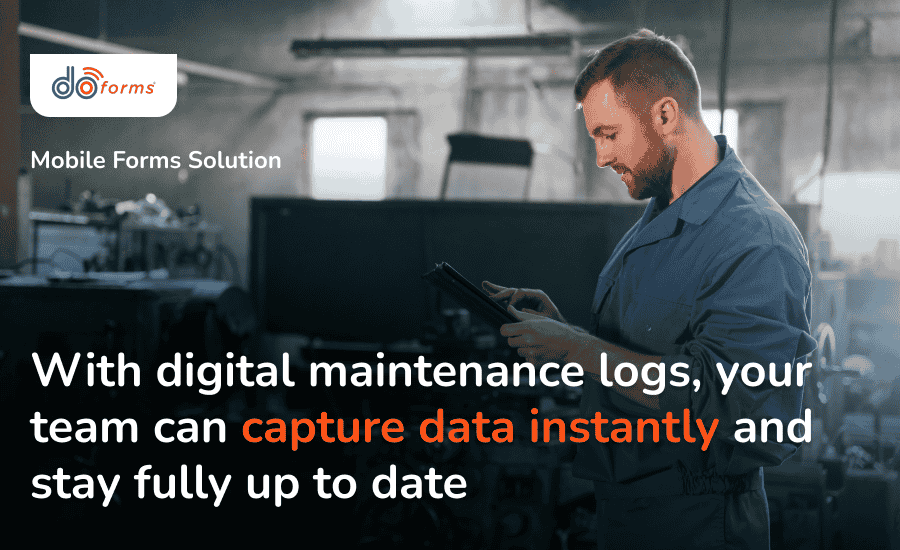
Digital tools eliminate manual processes and ensure your maintenance data is always accurate
How To Use An Equipment Maintenance Log
Setting up a template is only part of it. What really matters is making sure everyone uses it the same way.
Log Data Immediately
Require technicians to complete logs right after finishing a task. Explain that delayed records may mean missing details and inaccurate records.
Train Your Team
Make sure your team understands what information to fill out, how detailed the log should be and why it’s important.
Review Logs Regularly
Establish a process in which managers should review logs weekly or monthly to identify:
- Frequent equipment failures
- Delayed maintenance
- Inefficient workflows
Integrate With Other Systems
Connect your equipment maintenance log with inventory, asset management, scheduling and other systems you’re using. This reduces duplicate data entry and improves efficiency.
Optimize Your Equipment Maintenance Logs With doForms
At some point, spreadsheets and paper stop being enough. That’s when teams look for a better system like doForms.
DoForms is a mobile forms solution that allows your team to fill out maintenance logs directly from their mobile devices.
This includes capturing data in real time, adding photos, collecting signatures and submitting reports on the go.
The outcome is streamlined workflows without delays and manual errors, plus ensuring that every record is complete and accurate.
With our DIY form builder, you can make a fully customizable equipment maintenance log template that matches your exact workflows, whether you manage field technicians, facility teams or production equipment.
Beyond maintenance logs, doForms allows you to build and manage a wide range of documents, including:
- Equipment inspection forms
- Preventive maintenance checklists
- Work orders and service reports
- Safety inspection checklists and audits (read more about the difference between inspection and audits)
- Incident reports
- Asset tracking logs
- Project management workflows
By connecting these documents in one system, you create a seamless flow of data across your operations. This improves visibility and accountability and allows you to make smarter business decisions.
See how mobile forms can cut your admin time.
Try doForms for free
Equipment Maintenance Log: FAQs
What is an equipment maintenance log?
At the simplest level, it’s just a running record of everything that’s been done to a piece of equipment: repairs, inspections, servicing, all of it.
What are the benefits from keeping equipment maintenance logs?
The biggest benefit is fewer surprises. When maintenance is tracked properly, downtime drops, compliance becomes easier to manage, and teams stay more accountable.
What should be included in an equipment maintenance log template?
At a minimum, you’ll want to track equipment details, what work was done, who did it, and when. From there, teams often add condition notes or attachments depending on how detailed they need the record to be.
Can digital logs replace paper logs?
Yes, and in most cases, they do it better. Digital logs are easier to access and harder to lose. They cut down a lot of the manual work that comes with paper.
How often should maintenance logs be updated?
Ideally, right after the work is done. The longer you wait, the easier it is to forget small but important details.
Ready to digitize your equipment maintenance logs?
Book a doForms demo